• Skip to primary navigation
  • Skip to main content
Options Pregnancy Resource Centers

Options Pregnancy Resource Centers

Pregnant? You've Got Options.

  • Services
    • Pregnancy Testing
    • Ultrasound
    • Your First Visit
    • Resources
    • Services We Do Not Provide
  • Be Informed
    • Abortion
    • Adoption
    • Parenting
    • Sexual Health
  • FAQs
  • Blog
  • Request an Appointment
  • Donate

Blog

Rh-Factor and Pregnancy

By Options RN- Louise Hall
What is Rh-factor?

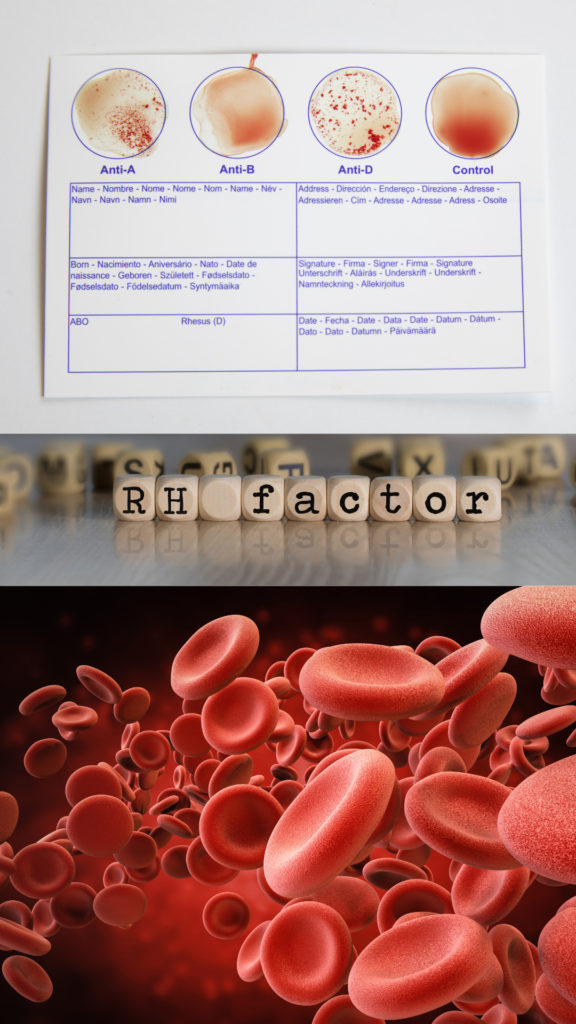
Rh-factor refers to an antigen that is on the outside of red blood cells. Antigens are proteins that help the body identify what belongs versus what is foreign. Anything identified as foreign is destroyed.

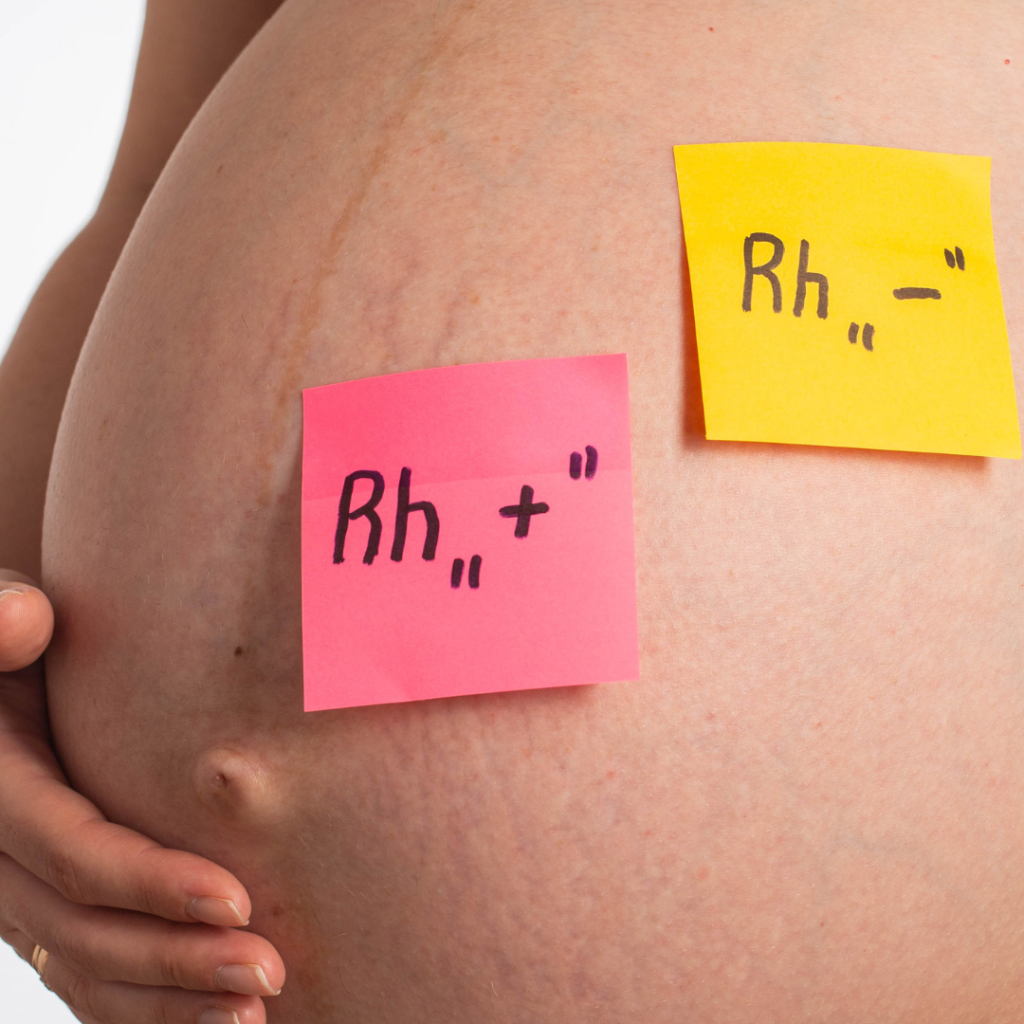
Not all people have Rh-factor on their red blood cells. Those that have it are called Rh-positive, and those that don’t are Rh-negative. Rh-factor is important in several contexts, but especially during pregnancy and blood transfusions. This is because if someone is Rh-negative and gets Rh-positive blood in their bloodstream, their body will try to destroy all the Rh-positive blood cells.

How does Rh-factor relate to pregnancy?

Rh-factor is controlled by your DNA. You get one set of DNA from your mother and one set from your father. Rh-positive is a dominant gene, meaning that if you have DNA that codes for Rh-positive from one parent, you will have Rh-positive blood. To have Rh-negative blood, both sets of DNA have to code for Rh-negative blood. This means that Rh-negative blood is more rare than Rh-positive blood types (about 15% of Americans are Rh-negative). If a woman is pregnant and she has Rh-negative blood, but her partner has Rh-positive blood, there is a possibility that the baby she is carrying is also Rh-positive. During a healthy pregnancy, a small amount of baby’s blood might enter the maternal blood stream, but not enough to cause a reaction. But there are some events surrounding pregnancy that can expose the woman to larger quantities of the baby’s blood. These events include miscarriage, induced abortion, certain tests that look for chromosomal abnormalities (such as amniocentesis or chorionic villus sampling), hemorrhage related to placenta previa or abruptio placentae, and childbirth.

What happens if a woman is exposed to Rh-positive blood if she is Rh-negative?

For the current pregnancy, exposure to Rh-positive blood probably won’t cause harm to the baby. It takes time for the mother’s body to develop antibodies that attack Rh-positive blood cells. The real effects show up in later pregnancies, because the antibodies are already waiting in the mother’s body. The risks are mostly on the side of the baby, not the woman, because the baby’s blood is being attacked by the mother’s antibodies. This can cause anemia, jaundice, and in severe cases, neurological disease and congestive heart failure.

If a woman has already been sensitized during a previous pregnancy and has antibodies against Rh-factor, the doctor will monitor her and her baby throughout the current pregnancy. If both are fine, nothing needs to be done. But if there is risk for the baby, they can start treatments even before the baby is born to reduce any side effects or harm.

Can these side effects be prevented?

Yes! There is a medication called RhoGAM that can prevent harm to future pregnancies. RhoGAM is “a commercial preparation of passive antibodies against Rh factor” that “prevents the formation of active antibodies against Rh-positive erythrocytes [red blood cells]” (Foundations of Maternal-Newborn Nursing).

How does a doctor give RhoGAM?

First, a woman who is Rh-negative will be tested to make sure that her body doesn’t have antibodies against Rh-factor. This test is usually done at her first prenatal visit. If her test is negative, nothing is done right away, but around 28 weeks the doctor will retest the patient, and if the results are still negative, they will give her a shot of RhoGAM. If a woman is Rh-negative, RhoGAM should also be given within 72 hours after any of the events listed above. In the case of childbirth, a sample of blood can be taken from the umbilical cord to be tested for Rh-factor. If the baby is Rh-negative, there is no need to give the woman the second shot of RhoGAM, but if the baby is Rh-positive, the dose will be given.

How do I learn my Rh-factor type?

You can learn about your blood type in a couple different ways. You can ask your doctor to test your blood type when you have other lab work done or, if you donate blood (such as through the Red Cross), your blood will be typed then.

References: Foundations of Maternal-Newborn Nursing (Fourth Ed). Murray, S. S. and McKinney, E. S.

Pelvic Floor Health

Pelvic Health Resources

What is the Pelvic Floor?

Your pelvic floor is the layered muscle that stretches like a hammock from the front of your pelvis to the bottom of your backbone. Pregnancy and childbirth put a strain on these muscles and connective tissues that sit in your pelvis. This system is responsible for various necessary bodily functions, including supporting your pelvic organs, controlling your bathroom habits, regulating abdominal pressure, and stabilizing your spine and trunk. Research shows that caring for your pelvic floor during pregnancy by knowing how to strengthen and relax your pelvic floor can go a long way towards helping to prevent post-pregnancy pelvic floor dysfunction.

During pregnancy, the pelvic floor muscles have to support more weight as your baby grows and your weight increases. Your pelvic floor tissues can stretch more than three times their normal length during a vaginal birth. Early on in pregnancy and through the second trimester, most experts recommend focusing on building strength in the pelvic floor. This helps keep your pelvic floor strong as your baby grows, which can help you adapt to the increasing stress on these muscles throughout your pregnancy.

Exercises For First and Second Trimester:

Excercise #1: Perform pelvic floor contractions (aka Kegels) regularly. Make sure you are performing a full pelvic floor contraction and release whenever you do Kegels. Try this:

-Sit comfortably on the floor with your knees bent.

-Take a deep inhale, feeling your ribs expand.

-On the exhale, contract and lift your pelvic floor.

Imagine that your pelvic floor is an elevator that you’re trying to slowly move from the bottom floor of a building up to a higher floor. Another visual to try: Think about trying to pick up and hold a blueberry with your vaginal opening. These visualizations can be helpful to make sure you’re contracting the entire muscle group in a coordinated way.

Exercise #2 (Stomach Muscle Exercise):

-Start on all fours, making sure your knees are under your hips and hands are under your shoulders. Have your fingers facing forwards and abdominal muscles lifted to help keep your back straight.

-Pull in your stomach muscles and raise your back towards the ceiling, letting your head gently relax forwards. Don’t let your elbows lock.

-Hold this for a few seconds and then return to the original position.

-Take care not to hollow your back. Your back should always return to the straight, neutral position.

-Do this rhythmically 10 times, making your muscles work hard and moving your back carefully.

-Only move your back as far as you can while still feeling comfortable.

Exercise #3 (Pelvic Tilt Exercise):

-Stand with your shoulders and bottom against the wall, keeping your knees soft.

-Pull your belly button towards your spine so your back flattens against the wall, hold for four seconds and release.

-Repeat 10 times.

-Try to do three of these sessions every day.

Third Trimester:

It is important to focus on learning to relax your pelvic floor as labor nears. Your pelvic floor muscles need to fully relax and stretch so they can make way for your little one to exit!

Exercise to try:

-Begin by sitting comfortably and taking a few deep breaths, feeling your ribs expand.

-Then, on an inhale, picture a flower gently opening.

-See if you can feel your pelvic floor relaxing and opening as you do this. As you did with contractions, repeat for 10 to 20 breaths.

You can work this into an exercise routine or any down time you might have, such as when sitting in traffic or waiting at a red light.

Final Thoughts and References:

A study done in Portugal on Pelvic Floor Muscle Training showed that the PFMT protocol reduces urinary incontinence in pregnant women. The program allowed significant improvement in the quantity of urinary leakage and an increase in the strength of the pelvic floor muscle.

Ncbi.nlm.nih.gov

Nct.org.uk/pregnancy/exercise

What to expect.com


Cycles & Ovulation Pt.2

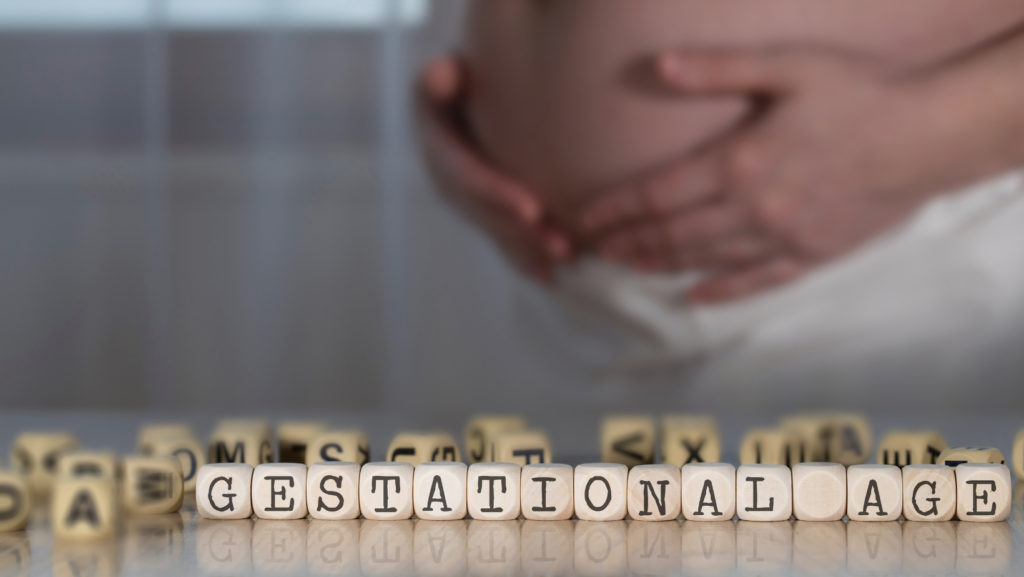
This is part 2 of an in depth explanation of menstrual cycles, conception and how it relates to gestational age.

Written by Options Nurse Manager- Louise Hall, RN

In the previous blog post, we looked at the menstrual cycle and the fertile window.  Keeping these things in mind, let’s take a look at the difference between gestational age and the date of conception.

When a woman is pregnant, doctors, nurses, and midwives routinely ask about the first day of her last period (FDLP).  Why is this?  Well, in the past, the FDLP was the most reliable way to determine how far along in a pregnancy a woman was.  The number of weeks and days since her FDLP is how the pregnancy was dated, and this was relayed to the patient as the estimated gestational age (EGA).  Using this type of dating, a pregnancy carried to full term will last 40 weeks.

Looking at the menstrual cycle though, it is highly unlikely that a woman would get pregnant on the first day of her last period.  Even though this is true, in the past, the FDLP was a concrete date that could be used not only to estimate how far along she was, but also when she would deliver.  Since the introduction of routine ultrasound use in pregnancy, however, it has been discovered that the FDLP can over- or under-estimate how far along a woman is by about a week.  Additionally, some women don’t track their periods closely, or their cycles could be irregular due to recent childbirth or breastfeeding, PCOS, or the use of hormonal birth control, and the FDLP reported may be a general estimate.  Currently, early ultrasound is considered the gold-standard for dating a pregnancy.

Let’s give a brief example. Say three women came to a pregnancy clinic on July 21.  All three women report that their FDLP was June 1st.  The first woman has the “text-book” cycle length of 28 days.  Assuming that this cycle was normal for her, she will most likely be 7 weeks 1 day pregnant by gestational age, and her baby would have been conceived about 5 weeks ago.  The second woman has a cycle length of 21 days.  Again, assuming this last cycle was normal for her, her gestational age could be 8 weeks 1 day, with her baby conceived about 6 weeks prior.  Finally, the third woman reports a 35-day cycle.  Her gestational age might only be 6 weeks 1 day, with conception occurring about 4 weeks prior.  All three women report the same FDLP, but they all could be at slightly different stages in pregnancy.

If there is such variation in pregnancy dating based off the FDLP, and if ultrasounds are the most accurate way to date a pregnancy, then why is the EGA still used when it’s based off of the FDLP?  In part, it probably is related to the fact that it is how pregnancy has been measured for generations.  But additionally, some women don’t receive an ultrasound in the early weeks of pregnancy, and once a woman is beyond 10-12 weeks EGA, the measurements are less precise and the FDLP becomes a more reliable way to date her pregnancy.  Unless the difference in EGA is substantial, if there is a difference in the date given by an U/S and a woman’s reported FDLP, the FDLP is considered more accurate.

Even though the guesswork in determining conception can’t be removed entirely, with a basic understanding of the menstrual cycle, the fertile window, and how gestational age works, it can be a lot less confusing.  While I learned the basics about the menstrual cycle in school, it wasn’t until after I had graduated that I learned more about the fertile window and the specifics of when conception could occur.  As women, it is good for us to understand the design of our bodies.  It can help us understand how to plan or prevent pregnancies without the use of hormones, if that is important to us, and it can help us recognize early if something unusual is going on that could warrant a visit to the doctor.

Monthly Cycles & Ovulation

This is part 1 of an in depth explanation of menstrual cycles, conception and how it relates to gestational age.

Written by Options Nurse Manager- Louise Hall, RN

As a nurse, I have been asked by multiple women what the “conception date” of their baby is.  This can be a confusing topic, especially if a pregnancy is dated at, say, six weeks, but she only reports having sex once about four and a half weeks ago.  So how can one determine when a baby was conceived?

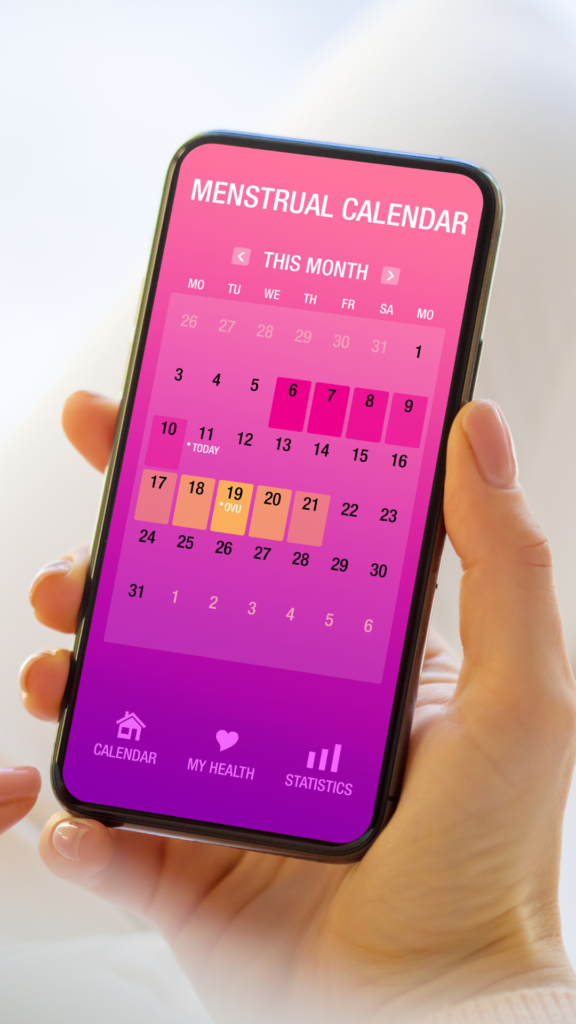
First, we need to review a few things about a woman’s menstrual cycle.  Over a period of about 21-35 days, the hormones in a woman’s body fluctuate.  The menstrual cycle begins on the first day of her period.  Estrogen and progesterone levels decline, and the lining of the uterus sloughs off.  Bleeding can last anywhere from 2-8 days, with some women reporting shorter or lighter periods, and others longer or heavier ones.  As the uterine lining is shed, hormones start changing again, with estrogen levels rising, causing the lining of the uterus to thicken and an egg in the ovary to mature.  How quickly this happens after a period starts depends on each individual person.

Once the egg is ready to be released, there is a surge of hormones that cause the egg to leave the ovary and enter the fallopian tube.  This is called ovulation, and it is accompanied by a rise in the hormone progesterone.  At this point, the egg is ready to be fertilized.  If it is fertilized, it travels down the tube and implants in the uterus about a week after conception. The high levels of progesterone make sure the uterine lining is ready for this implantation.  But if fertilization does not occur, the egg disintegrates and is reabsorbed into the body.  About two weeks after the egg is released, the cycle ends, and a new cycle begins with the starting of another menstrual period.

The phases of the menstrual cycle are standard to all women of childbearing age, though exceptions do occur, such as with PCOS (polycystic ovarian syndrome), and changes that occur naturally as a woman is nearing menopause.  Additionally, there are typically about 14 days between when ovulation occurs and the start of her next period, with usually only a few days variation between women.  What varies most often is the length of time during the first half of the menstrual cycle.

For example, if a woman’s cycle is only 21 days long, she most likely ovulated around day 7 of her cycle.  On the other hand, if a woman’s cycle was 35 days, she probably ovulated closer to day 20.

The difference in when a woman ovulates makes a difference in when she is considered fertile.  The “fertile window” is the days during a menstrual cycle that a woman could potentially get pregnant if she is sexually active.  The fertile window is often considered to be 5 days before through 48 hours after ovulation.  There are two factors that are considered when identifying the “fertile window”.  First, sperm can stay alive in a woman’s body for up to 5 days, so even if a woman doesn’t have sex on her ovulation day, if she did within the previous 5 days, she could still conceive.  Additionally, the egg can stay alive for 24-48 hours after ovulation, so she is still able to conceive during the day or two after she ovulates.

Job Search Tips

“Where do I start?”

Looking for a job can be overwhelming. Here are some tips that can help get you started. Just remember, you don’t have to do everything all at once!


  • Don’t limit yourself to online applications. Contact companies directly and don’t be afraid to follow up.
  • Keep your resume to one page and stick to work experience that is most relevant to the job you’re applying for.
  • Always dress to impress. A good rule of thumb is to wear something that is one step above what the job’s dress code is. For example- if the job’s dress code is business casual, then you should wear something more on the business/formal side for the interview.
  • Set goals. For example; dedicate a certain number of hours each week to job searching and/or decide how many jobs you want to apply for each day.
  • Use https://www.loopcv.pro/ to automate the job application process for you and provide you with a list of jobs that fit your profile.
  • Create a LinkedIn account, update your job history and start connecting with people who are already in the career that you’re interested in.
  • While you’re searching for a job, volunteer or find an internship in the field you are interested in (https://www.internships.com/). You can add this to your resume and it will help with networking.
  • Use https://novoresume.com/ for easy resume building and templates.
  • Have someone you know and trust proofread your resume and/or cover letter. Especially if you know someone who is (or has been) in a hiring manager role before.

Marijuana And Pregnancy

Marijuana is the most commonly used drug in the United States. Marijuana use is a concern for individuals who are pregnant. Is it safe?

While many states have legalized its use for medicinal purposes, and several states, including Oregon, also permit it for recreational use, marijuana is still federally illegal.  Because of this, the regulations on its study are highly restricted and there are few experiments on its effects, both positive and negative.  Additionally, most of the studies that have been done used marijuana with THC levels equivalent to what they were in the 1980s or earlier.  THC levels have nearly tripled since that time, so it has been argued that the findings of these studies may not accurately report the risks associated with marijuana use by the average American today.

Many pregnant women report using marijuana to either manage anxiety or to deal with morning sickness. As we’ve mentioned before, there is little data to support it’s use to minimize morning sickness. We do know that studies have shown that higher doses of THC are linked to increased heart rate and anxiety and panic attacks, the opposite of the intended outcome.

When it comes to marijuana, many of its compounds can cross the placenta, so what the mother takes in, whether through topical application, ingestion, or inhalation, will affect her baby.  THC, the compound in marijuana that alters mental perception, is stored in fat, so it may accumulate in the baby’s tissues over time.  Additionally, smoking marijuana poses risks similar to those of smoking cigarettes.  Tar is present in smoked marijuana like it is in cigarettes, and some of the carcinogens found in cigarette smoke were found in higher concentrations in marijuana smoke.  Smoking marijuana has been linked to premature birth, increased rates of stillbirth, low birth weight, intrauterine growth restriction, and smaller head circumference. 

Marijuana use not only affects a baby in the womb, but it can affect the baby if the mother chooses to breastfeed as well.  The same marijuana components that cross the placenta also cross into the breastmilk of women who use marijuana.  The most significant of these is THC.  Because of the fat content in breastmilk, THC levels in breast milk can be higher than those measured in the blood plasma of the mother.  Additionally, THC can be detected in breastmilk up to 6 days after the mother’s last use.  Thus, even though the exposure to THC is lower in the infant than in its mother, the baby is still exposed to a significant amount of THC over time, especially if the mother uses marijuana on a regular basis.

Even with only a few studies being done to show the effects of marijuana on a pregnant woman as well as her unborn child, the information we do have shows that the possibility of marijuana having a negative effect are high. If you think you might be pregnant, schedule an appointment with us today for a free pregnancy test and if you have any further questions or concerns related to marijuana and pregnancy, and please do not hesitate to reach out to your doctor.


References:

ACOG. (2017). Marijuana use during pregnancy and lactation, Committee Opinion #72.

Ashton. (2018). Pharmacology and effects of cannabis: A brief review, British Journal of Psychiatry.

Avery, J. (2019). Marijuana: An honest look at the world’s most misunderstood weed, Christian Medical & Dental Associations.

Bertrand, Hanan, Honerkamp-Smith, Best, and Chambers. (2018). Marijuana use by breastfeeding mothers and cannabinoid concentrations in breast milk.

Bridgeman and Abazia. (2017). Medicinal cannabis: History, pharmacology, and implications for the acute care setting, Pharmacy and Therapeutics.

Centers for Disease Control and Prevention. (Accessed 12/2021). Marijuana and public health: What you need to know about marijuana use and pregnancy.

Di Forti, et al. (2019). The contribution of cannabis use to variation in the incidence of psychotic disorder across Europe (EU-GEI): a multicentre case-control study, The Lancet Psychiatry.

DOH, Government of the District of Columbia. (Accessed 1/2022). Medical cannabis: Adverse effects & drug interactions.

MedlinePlus. (2021). Marijuana, National Institutes of Health.

Nall, R. (2018). The effects of smoking weed while pregnant, Healthline.

National Academies of Science, Engineering, and Medicine. (2017). “Prenatal, Perinatal, and Neonatal Exposure to Cannabis”, ch. 10, pp. 245-266, The Health Effects of Cannabis and Cannabinoids: The Current State of Evidence and Recommendations for Research.

National Academies Press. (2017). The health effects of cannabis and cannabinoids: The current state of evidence and recommendations for research, National Academies Press.

National Institutes of Health. (2020). Marijuana research report: Can marijuana use during and after pregnancy harm the baby?.

Sohn, E. (2019). Weighing the dangers of cannabis, Nature, 572.

Substance Abuse and Mental Health Services Administration. (2021). Marijuana and pregnancy.


  • « Go to Previous Page
  • Page 1
  • Page 2
  • Page 3
  • Go to Next Page »

Copyright © 2026 Options Pregnancy Resource Centers